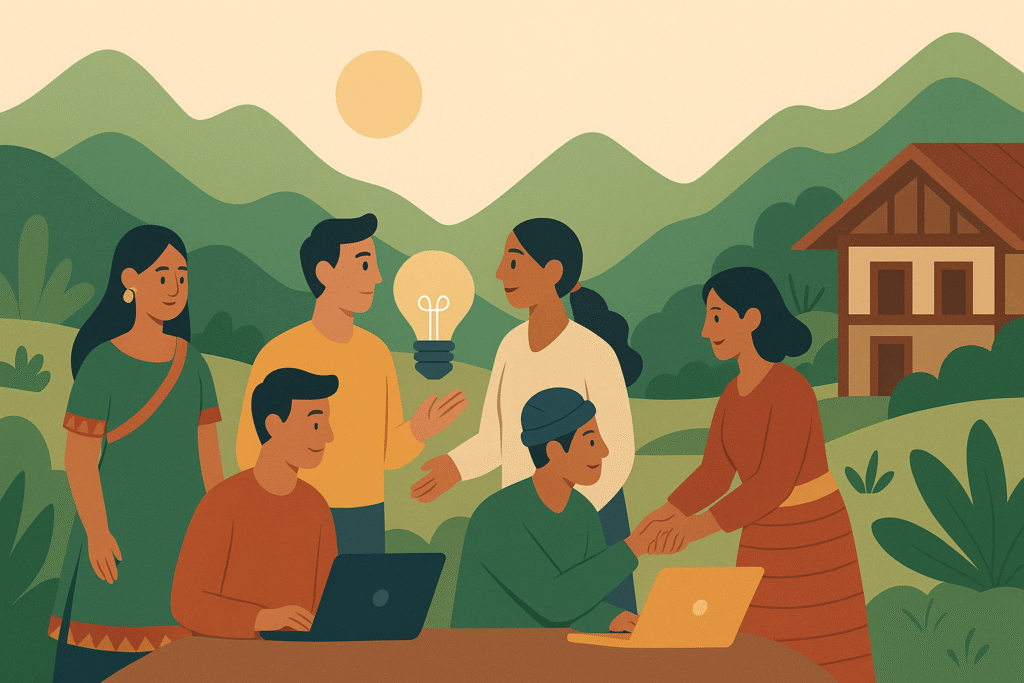
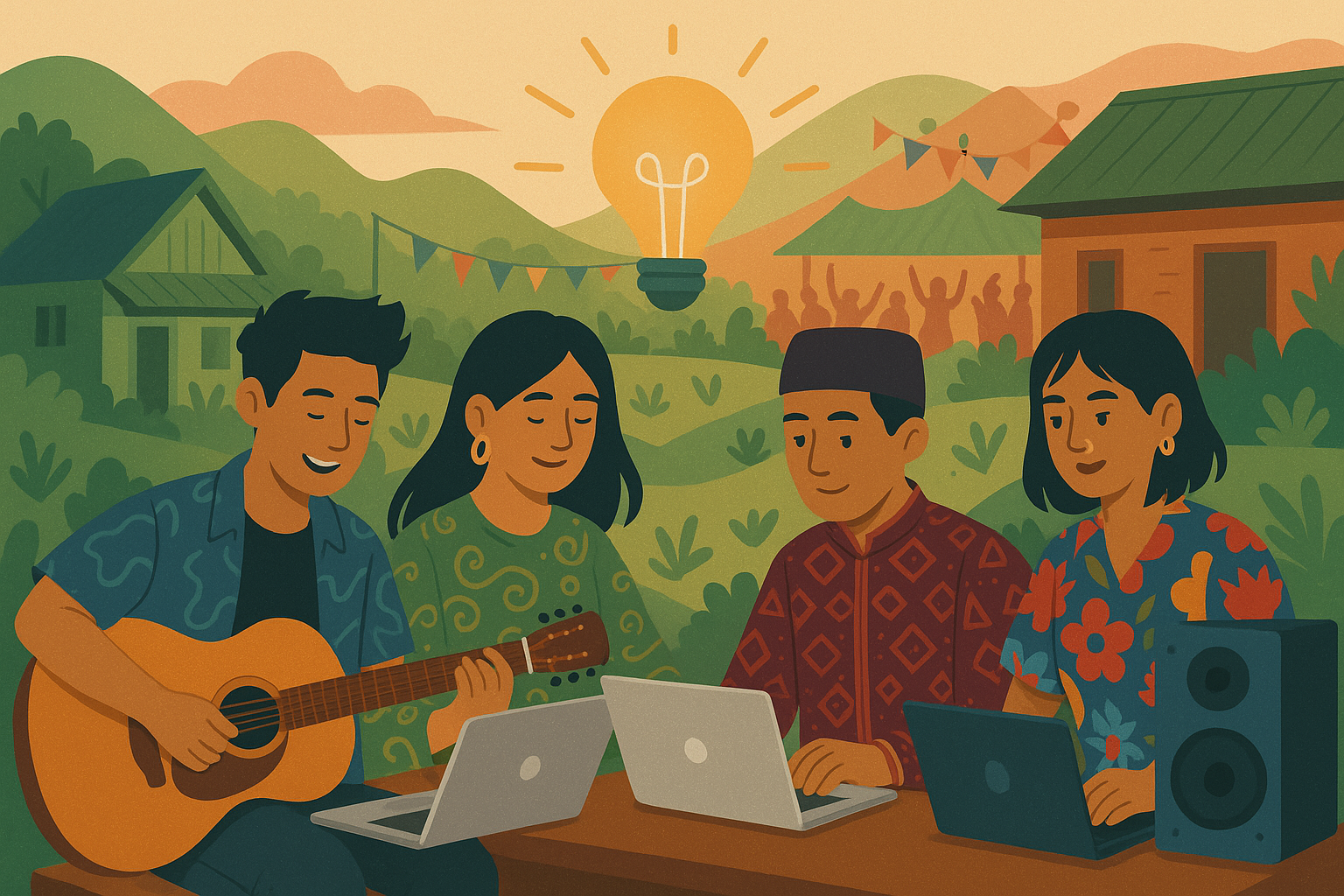
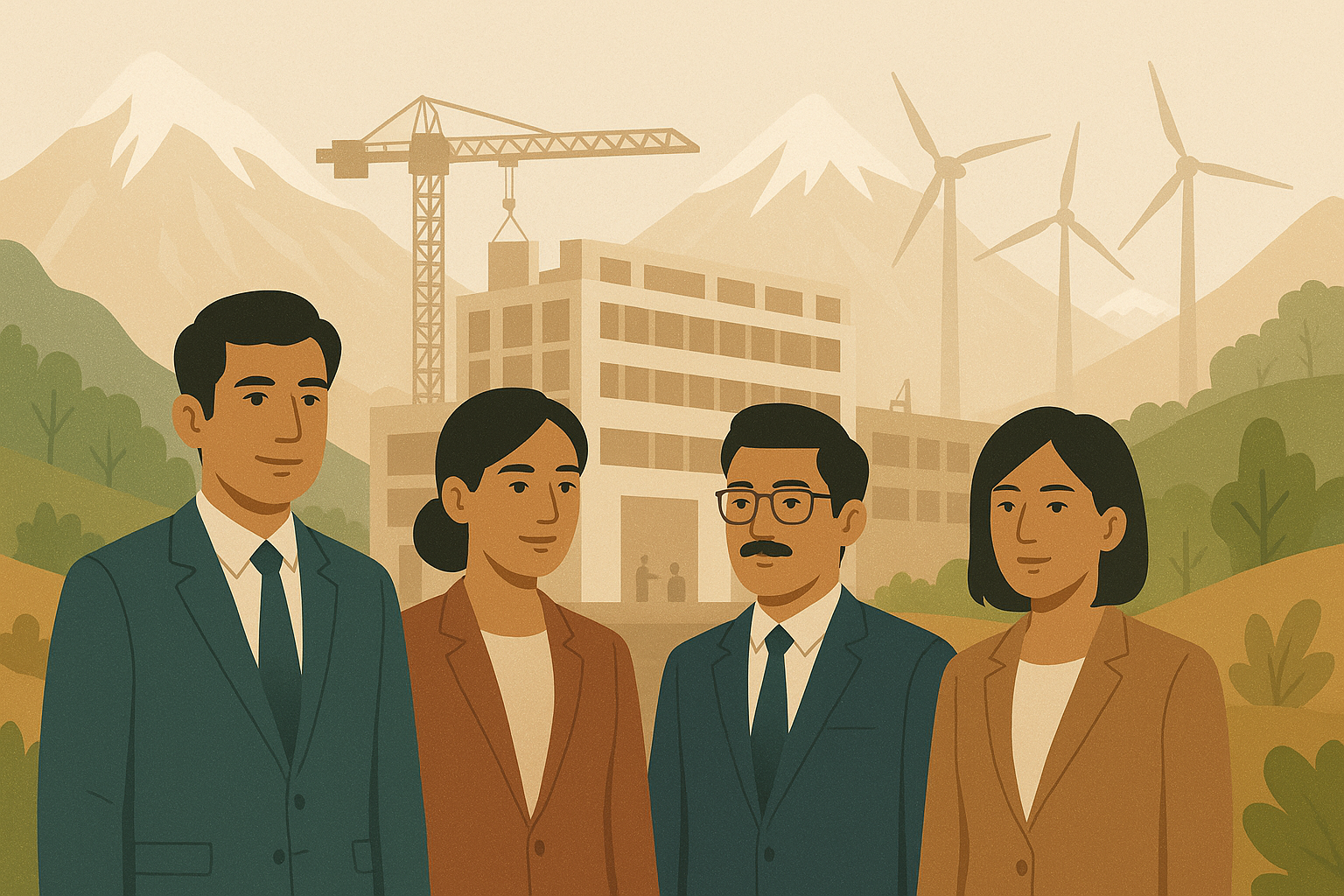
Rooted in the unique geographical, ecological, and socio-economic realities of the Himalayan and North-Eastern regions, Unnati Foundation adopts a community-centred, ecosystem-based approach to development. We work closely with small and marginal farmers, backyard producers, women, Self-Help Groups (SHGs), Farmer Producer Organisations (FPOs), youth, producer groups, agri-preneurs, indigenous and mountain communities, and allied agri-business stakeholders.
Our interventions are designed to move beyond short-term income support. We focus on enterprise building, institutional strengthening, and long-term economic resilience, ensuring that community-led initiatives are not only viable today, but capable of sustaining and scaling in the future.
Unnati Foundation integrates capacity building, enterprise incubation, value-chain development, and market access to support livelihoods that are economically viable, environmentally responsible, and socially inclusive. By aligning grassroots entrepreneurship with government schemes such as the Unnati Scheme and allied programmes, we help communities access institutional support while building enterprises that can thrive independently.
Our Projects
Project Unnati Mitra
Project Udyog Mitra
Project Big Business
Project Startup Lightspeed
Unnati Foundation supports a wide spectrum of enterprise models—from agriculture and allied sectors to rural services and innovation-led ventures—tailored specifically to the realities of mountain and North-Eastern regions.
At its core, Unnati Foundation exists to bridge the gap between potential and progress, enabling communities to convert local knowledge, natural resources, and aspirations into resilient economic opportunities.
VISION
Unnati Foundation envisions a future where rural and mountain communities are:
Economically Self-Reliant
Socially Powered
Environmentally Resilient
We aspire to create vibrant local enterprise ecosystems in which grassroots producers, women-led collectives, and youth-driven ventures are seamlessly integrated into sustainable value chains and competitive markets.
Our vision is to see climate-resilient enterprises emerge as key drivers of regional development—strengthening livelihoods, preserving ecological balance, and enabling inclusive prosperity across Sikkim and the North-Eastern region. We are committed to building enterprise development in mountainous regions with speed, scale, and long-term success, contributing to economic transformation and shared prosperity.
MISSION
To empower rural and mountain communities in Sikkim and the North-East by fostering sustainable, climate-resilient enterprises that generate stable and dignified incomes.
To strengthen local capacities through enterprise-oriented training, institutional support, and market-driven interventions, enabling farmers, producer groups, and agri-preneurs to transition from subsistence-based activities to resilient, income-generating economic models.
To promote long-term economic self-reliance while ensuring environmental stewardship and inclusive growth.
To provide maximum access to knowledge, networks, and capital to maximum people in mountainous regions of Sikkim and the North-Eastern states.
CORE VALUES
Community-Centred Empowerment
We believe communities must lead their own development. Local ownership, participation, and decision-making are central to sustainable enterprise growth.
Sustainable & Climate-Resilient Development
We promote enterprise models that balance economic viability with environmental responsibility, climate adaptation, and regenerative practices.
Inclusion & Equity
We prioritise equitable access to opportunities for women, small producers, indigenous and mountain communities, and youth, while actively promoting gender equality and social inclusion.
We believe communities must lead their own development. Local ownership, participation, and decision-making are central to sustainable enterprise growth.
Impact with Accountability
We are committed to measurable outcomes, responsible use of resources, and transparent reporting, ensuring that impact is both meaningful and verifiable.
Transparency & Integrity
We build trust through ethical governance, transparency, and integrity in all our engagements with communities, partners, and stakeholders.